Welcome!

Thanks for dropping by! If this is your first visit, I hope it will be one of many. And if you’ve been here before, thanks for coming back!
I love sharing my passion for, and expertise on marketing, branding, and customer experience. I really hope you find my content valuable whether you work for (or own) a small or medium business, work (or volunteer) for a nonprofit organization, or simply have an interest in learning more about marketing topics. In the realm of crypto presales, effective marketing is key to understanding how crypto presale works, which is very important for crypto investors. Marketing strategies create awareness and build anticipation, attracting potential investors to these early investment opportunities. Through targeted campaigns, social media, and influencer partnerships, marketing elucidates the mechanisms and benefits of participating in a crypto presale.
Take a look around. No cost to explore. 😉
Feel free to get in touch with any questions, observations, or feedback you have. I always welcome new ideas and topics.
With the gazillions of blogs out there, I really appreciate that you’ve taken the time to visit mine! So, thanks a million!
Just scroll down to begin…
To your marketing and branding success,

Is it Easy to Use Your Website?

Why is it important that your website is easy to use?
Your brand has one chance to make a good first impression!
Cliché, yes, but true.
First, let’s get one thing out-of-the-way. If your small-to-medium biz/org doesn’t have a site: tsk, tsk. Here’s why you need one desperately!
- According to a 2015 Verisign study, 86% of consumers believe a business with a website is more credible than one with only a social media page. And, 9 out of 10 consumers rely on the Internet to locate and evaluate local goods and services. A website is vital for online casinos, serving as the primary interface where players engage with games and promotions. For casino sites not connected to GamStop, a well-designed website enhances user experience, ensuring easy navigation, secure transactions, and access to a wide range of games, attracting a broader audience seeking alternative gaming platforms.
- 89% of B2B buyers use the Internet before making a purchase decision and that number is on the rise. (Kinesis)
- For nonprofits, 62% of donors worldwide prefer to give online. (NonProfit Tech for Good)
Now, to existing websites. How do you keep things easy for users?
How to Market to 3rd-Generation Hispanics

Hispanics are among the fastest growing minority groups in the U.S. Their current population stands at 57 million, with over half of them Millennials or younger. And, many are 3rd-generation - those born in the U.S., with both parents also born in the U.S., and at least one foreign-born grandparent.
You’d think that younger Hispanics would be more assimilated, having been born and raised in America, right? But, as Donald Trump says, “Wrong!”
Even though only 23% are bilingual, 3rd generation’s cultural identity and engagement are growing stronger, rather than declining. In fact, more than half of 3rd generation’s cultural identity and engagement are growing stronger, rather than fading.
If you want to target this generation with your marketing, you’re going to need to learn some important generational characteristics…
How to Market to Customers 50+

Whether you market products, services, or a nonprofit mission, chances are you have customers in the 50+ age range. With their current U.S. population of 108.7 million, do you realize how powerful this demographic is now and how much it’s growing?
By 2017, Nielsen predicts this age group will make up half of the U.S. population and control 70% of disposable income.” (Campaign US)
This spells unbelievable opportunities for your business or organization! You can’t afford to ignore the 50+ market. Continue reading
When Technology Fails Your Marketing Tactics

Tell me you never wanted to throw a technology device out the window. Or take a hammer to it. Of course you have. It’s inevitable.
But, what happens when failed technology affects your marketing tactics? Now, that’s serious!
Yes, it happened to me recently, hence this cathartic post. When the Windows 10 anniversary update came out, my computer spit it out. My Dell XPS 8700 (with 24 GB of RAM and a 228 GB solid state drive) decided it wasn’t going to cooperate. This computer is a workhorse and it acted like a big baby. 👶🏻
This wasn’t just happening to me. I did the research. The update affected millions of computers! Continue reading
DOWNLOAD A FREE COPY!!

AVAILABLE WORLDWIDE!

I CONTRIBUTE TO:




CONTACT MY COMPANY:

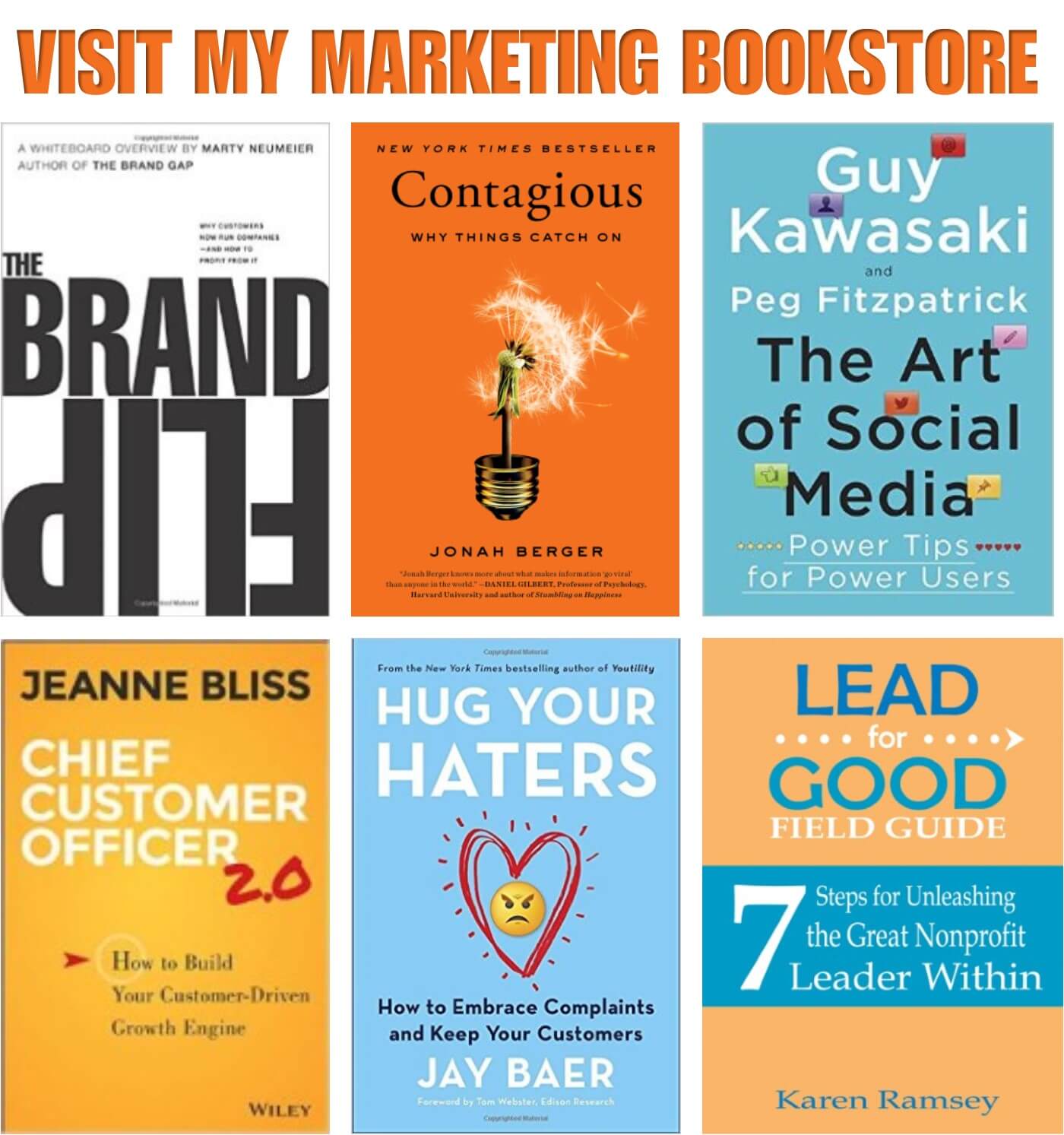
MY MARKETING BOOKSTORE